What Nobody Warns You About Your First Kindergarten Parent-Teacher Conference

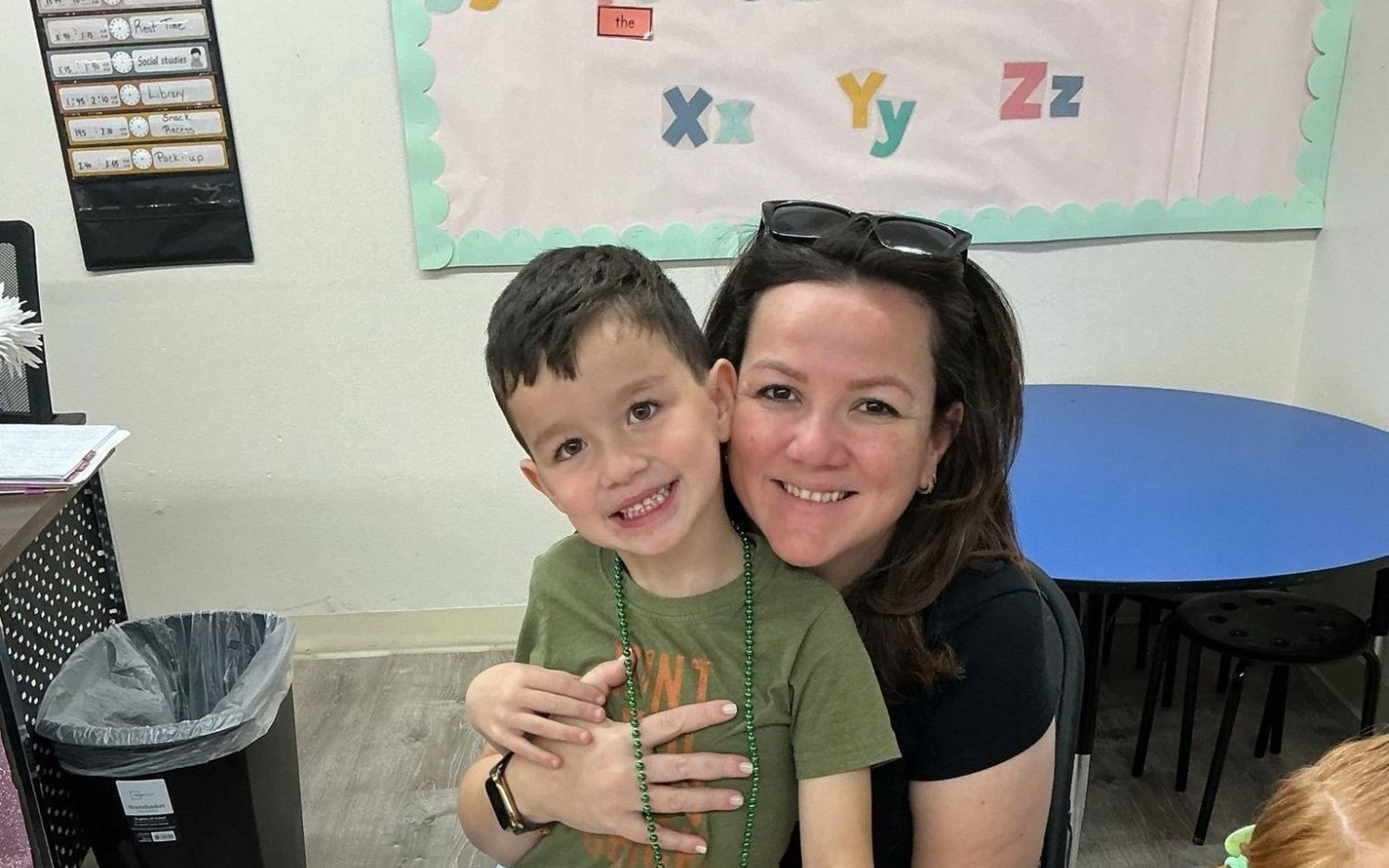
Your first kindergarten parent-teacher conference is less about reading levels and more about discovering who your kid is when you're not in the room. Prepare three targeted questions, focus on social-emotional regulation over worksheets, and remember that sitting in a chair built for a five-year-old makes every parent sweat a little.
On this page
Listen, nobody warns you about the physical and emotional indignity of perching your fully grown adult rear end on a plastic chair twelve inches off the linoleum floor while an angel of an educator evaluates your entire life’s work in fifteen brisk minutes.
I walked into Luke’s elementary school last Thursday smelling faintly of the chicken piccata sauce I had prepped before leaving the house, clutching a notebook like I was heading into a corporate deposition. Hubs took a twenty-minute break from his home office desk to meet me there, unfolding his tall frame out of the truck in the parking lot looking equally terrified. We had been waiting for this moment since school began back on August 12th.
Luke turned 5 on September 25th. Because Colorado’s cutoff is October 1st, my sweet, wild boy literally squeaked into the classroom with six days to spare. He is officially one of the youngest kids in the entire grade. Every single morning when the alarm goes off at 6:45 and I pull him out from under his blankets, dress him in camo head to toe, zip up his Burlebo backpack, and buckle him into his booster seat in the back of the truck, a little voice in my head whispers: Is he actually ready for this? Are we doing this right?
If you have your very first kindergarten conference looming on the calendar, take a deep breath. Pour something warm. Let’s talk about what actually goes down in that room, what will surprise the hell out of you, and what genuinely matters.
Why was I sweating sitting in a chair built for a five-year-old?
The anticipation leading up to this meeting is so much worse than the meeting itself. When Luke was younger, childcare or preschool check-ins felt low-stakes. They told you if he napped, if he ate his snack, and if he threw sand at another toddler. It felt casual.
Kindergarten is different. Suddenly there is a hallway with real lockers, a lanyard around your neck with a visitor badge, and student artwork taped precisely beneath little name tags. You walk past the cafeteria and feel an immediate sensory flashback to your own childhood, right down to the industrial wax smell on the floor tiles.
By the time Hubs and I squeezed our knees up toward our chins at Luke’s assigned table, my palms were clammy. Here is the quiet truth: as a mom, you sit down in that room feeling like you are the one being graded.
- Did I read enough books with him every night?
- Does his teacher know that when he gets overtired, he doesn’t melt down with tears, he gets goofy and stubborn?
- Is he falling behind because his birthday was five minutes before the cutoff?
- Does she think I am a total disaster of a mother because his knees always have playground dirt ground into them?
Teachers are not sitting there keeping a mental tally of your parenting failures. They genuinely want to partner with you. But your mama brain does not care about logic when you are staring at a glossy file folder with your firstborn’s name printed across the tab.
What did the teacher actually tell me about Luke?
Here is the absolute wildest part of the kindergarten conference: you find out who your kid is when you are nowhere near the perimeter.
At home, Luke is loud, full of jokes, outdoors-obsessed, and constantly trying to do everything exactly like his dad. He will argue about why he has to eat his lunch before having watermelon, climb on top of the fence to watch diggers down the road, and beg to watch Outdoor Boys on YouTube. He is our whole world, but let’s be real—he is a handful.
So when his teacher opened the folder, smiled, and said, “Luke is such a steady, quiet helper in the classroom,” Hubs and I literally glanced at each other to make sure we were talking about the same human being.
- The school persona is real: Your child has an entire social identity that belongs exclusively to them and their classroom community. Luke raises his hand. He waits his turn to wash his hands. He hangs his jacket on his hook without someone reminding him four times. Hearing that your wild boy knows how to regulate himself in public feels like finding a hundred-dollar bill in the pocket of your jeans.
- The youngest-kid factor showed up in surprising ways: Because Luke just turned 5 in late September, I expected academic red flags. But his teacher was unfazed by the calendar. She showed us his early literacy benchmarks and his number sense, both right on track. Where his age actually showed was fine-motor stamina—his hand gets tired faster when holding a pencil for long stretches—and his transitions between high-energy recess and quiet work.
- The quirky habits transfer over: She laughed and mentioned that Luke spent ten minutes explaining the mechanics of a backhoe during free play, and that he insists on keeping his camo baseball cap neatly tucked inside his desk. They notice the little things that make your kid unique, and hearing an educator appreciate your child’s quirks makes your chest ache in the best possible way.
What did I actually care about vs what the paperwork showed?
Before you walk through those classroom doors, schools love to prime you with academic jargon. You’ll hear about phonemic awareness, sight words, letter-sound correspondence, fine-motor benchmarks, and counting to one hundred.
Yes, learning the ABCs is great. But when I was looking across the table at his teacher, I did not give a damn if Luke could identify twenty sight words or twelve sight words on November 1st. Kindergarten is November! He is five!
Here is what I actually held my breath to hear:
- Is he kind to other children? When someone drops their crayons on the carpet, does he help pick them up, or does he walk past? (She told us he shared his favorite green marker without being asked, and I almost cried right onto the math assessment sheet.)
- Does he advocate for himself? If he has to use the restroom, or if his milk carton won’t open, does he speak up, or does he sit there freezing in panic? As the youngest kid, this was my biggest fear. Finding out that he proudly asks for help when his shoe comes untied was a massive weight off my shoulders.
- How does he handle frustration? School is hard work. When he cuts crooked on a worksheet or can’t get his paper to fold right, does he shut down, or does does he take a breath and try again? Resilience at age five matters a million times more than whether he can write a lowercase letter ‘g’ with the proper hook.
- Does he feel safe and happy? You can teach any kid how to read eventually. You cannot force a kid to love being at school if the environment makes their stomach hurt with anxiety every morning at 7:45.
When the teacher slid the academic progress charts across the table, I scanned them politely. But the gold was in the margins of her notes where she jotted down how he interacts during morning circle time. Don’t let the charts distract you from the heart of your child.
What questions should you actually ask at your first conference?
Fifteen minutes vanishes in a blink. If you don’t steer the conversation toward what matters, the teacher will naturally spend the entire window walking you through standardized district paperwork because they are required to do so.
Take a tiny notepad with you. Do not rely on your brain to remember anything after walking through that elementary school door. Here are the questions that will give you the most honest, useful picture of your child’s daily life:
- “Who does my child gravitate toward on the playground?” This tells you everything about their social development. Are they playing tag in a pack? Are they pairing off with one buddy? Are they lingering near the duty teacher because they feel overwhelmed by the chaos of thirty kids sprinting around?
- “What does my child do when something is difficult for them?” You want to know their stress response. Some kids get silly to deflect. Some kids shut down completely and put their head on their desk. Some kids get angry. Knowing what your child does at school helps you mirror strategies at home.
- “Is there a specific time of day when they seem to lose steam?” For Luke, that 1:30pm stretch before dismissal is tough. He’s up early at 6:45, he runs hard, and his stamina flags. Knowing his weak spot allows me to have a solid snack waiting the second he climbs into the booster seat—usually a piece of fruit or a hard-boiled egg sandwich on homemade bread wrapped in foil—so we don’t have a total meltdown in the truck on the ride home.
- “What is one skill we can support at home through regular play, not worksheets?” Notice I specified through play. Please do not make your five-year-old sit at the kitchen island doing flashcards after six hours of structured school. Ask the teacher if you should work on opening snack wrappers independently, practicing scissor grips with scrap paper, or playing board games where they learn to lose without flipping the board.
- “Are there any social or emotional red flags you see compared to age-level expectations?” Because Luke is on the younger side, I asked this point-blank. A good teacher will give you a straight, compassionate answer without sugarcoating or causing panic.
How can you prepare without spiraling beforehand?
If your conference is coming up next week, here is your game plan to keep your nervous system regulated and get the absolute most out of the experience.
1. Talk to your child the night before
Don’t make it sound serious or scary. Do not say, “I’m going to go talk to your teacher about how you’re doing.” That sounds like they are in trouble.
Instead, ask them two simple questions while you’re hanging out: “What is your favorite thing you do in the classroom right now?” and “Is there anything at school that feels hard or confusing?” Luke told me that lining up quickly after recess feels tricky because everyone pushes, and that he loves math centers because they have plastic counting bears. Bringing his own words into the conference gave his teacher so much context, and it showed her that Luke and I talk through his school day.
2. Agree on priorities with your partner beforehand
If your partner is coming along, spend five minutes in the car or over your morning coffee getting on the same page. Hubs and I agreed ahead of time: I was going to ask about social dynamics and his focus stamina, and Hubs was going to ask about his motor skills and how he handles following multi-step directions. When you walk in unified, you don’t waste precious minutes interrupting each other or talking over the teacher.
3. Check your defensiveness at the exterior doors
It is deeply human to bristle if someone tells you your child struggled with listening during story time, or that they grabbed a toy out of a classmate’s hands. Your immediate instinct might be to make excuses—well, he didn’t sleep well, or he doesn’t do that at home.
Take a breath. Remember that the teacher sees your child through an objective, professional lens alongside twenty other five-year-olds. They are not attacking your parenting; they are giving you data. If the teacher mentions an area Luke needs to work on, the best response is simple: “Thank you for telling me. That gives us something clear to reinforce at home. How do you handle that when it happens in the room?“
4. Have an after-conference ritual
When that classroom door clicks shut behind you, you will feel an overwhelming rush of adrenaline leave your body. You will realize you were holding your breath for the entire fifteen minutes.
Plan something grounding immediately afterward. Hubs walked back to his home office to finish out his workday, and I drove home, threw on cozy clothes, and started a pot of pasta carbonara for dinner. When Luke hopped off the bus that afternoon in his dusty camo pants, I didn’t grill him about phonics. I just gave him a bear hug, told him his teacher loves having him in class, and watched him sprint outside to inspect the dirt pile by the driveway.
The big takeaway for kindergarten moms
At the end of the day, your child’s first report card or conference rubric will not predict where they go to college, what kind of adult they will become, or whether you did a good job during the baby years.
It is simply a snapshot of one very young child learning how to exist in the wide world outside your front door.
Luke is still the little boy who wakes up at 6:45 sharp, demands French toast on Saturday mornings, hates apples with a fiery passion, and wants to build forts in the living room with every cushion we own. He just happens to also be a kindergarten student who knows how to walk in a single-file line and hang his backpack on hook number seven.
If you are walking into your first conference this month, hold your head high. You brought that sweet baby this far. Sit in the tiny plastic chair, listen to the teacher with an open heart, take your notes, and remember that nobody on earth knows or loves that kid the way you do.
Affiliate link — if you sign up or buy through it, My Mama Mode may earn a small commission at no extra cost to you. As an Amazon Associate, My Mama Mode earns from qualifying purchases. My Mama Mode also participates in other retailer affiliate programs. Learn more.
Frequently asked
Keep it simple: bring a small notebook with 2-3 specific questions written down in advance, and a pen. You do not need to bring outside schoolwork, binders, or test results. Having a written list prevents your mind from going completely blank during the fast-paced 15-minute slot.
Most elementary schools schedule kindergarten conferences in strict 15- to 20-minute windows. Because time flies so quickly, let the teacher spend the first half sharing their observations and academic portfolio, then use the remaining minutes to ask your priority questions about social-emotional habits.
Stay calm and treat the teacher as a teammate rather than an adversary. Ask clarifying questions like, 'What does that behavior look like in real time?' and 'What specific cue do you use here in class that we can repeat at home?' A consistent approach between home and school is the fastest way to support your child.
Tap the one that fits, mama — no comment box, no pressure ✦
Keep reading, mama

The Puffy Coat Car Seat Danger (And How We Actually Stay Warm Without It)
Why bulky winter coats are dangerously unsafe in car seats and boosters, plus real, sweat-free layering hacks for freezing school mornings.
How We Finally Split the Mental Load (Without Big Fights or Resentment)
Feeling overwhelmed as a stay-at-home mom? Here is how Hubs and I divided our household mental load, dropped resentment, and restored peace.

How We Survive the 'Fall Back' Time Change with a 5-Year-Old Early Riser
When your 5-year-old already wakes at 6:45am, Daylight Saving Time threatens a 5:45am nightmare. Here is our real-life, sanity-saving survival plan.