Why We're Doing the 'Switch Witch' with Luke This Halloween (From an Honest Scratch-Kitchen Mama)

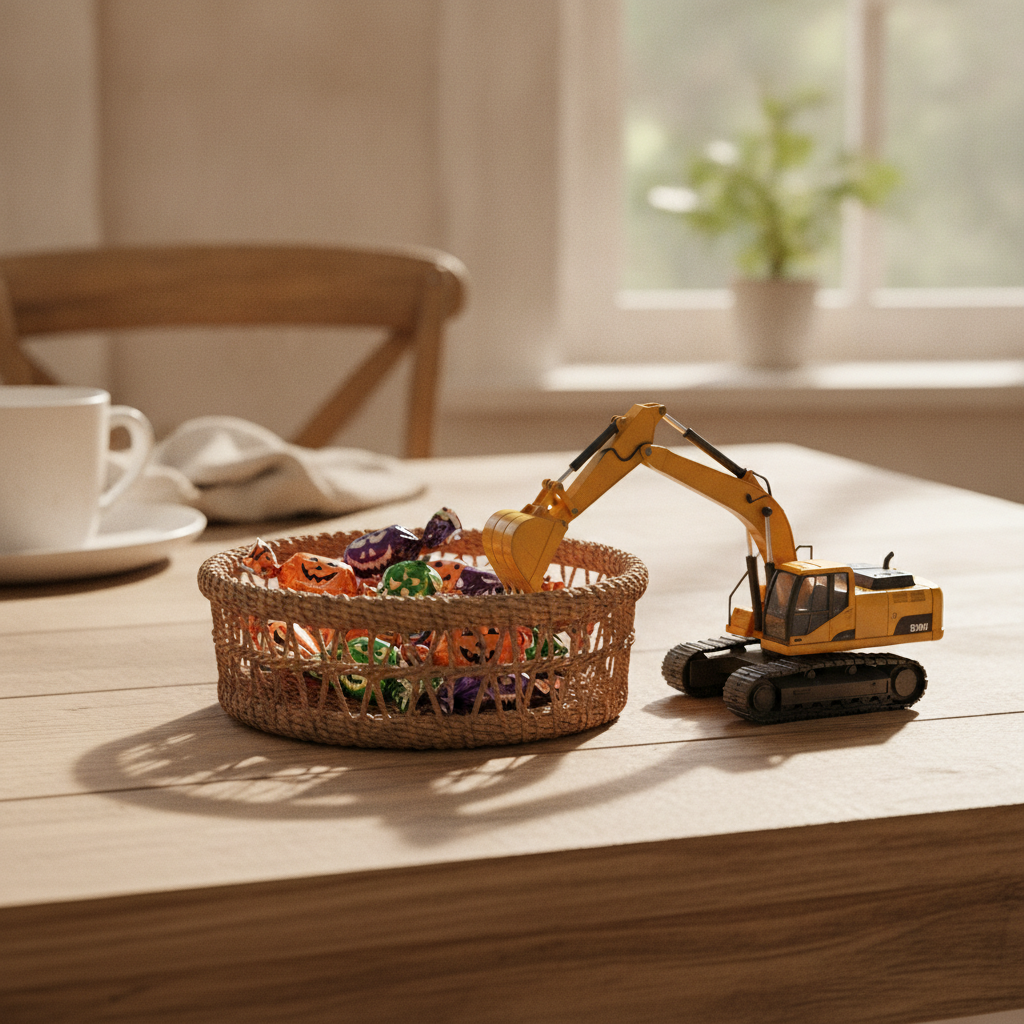
The Switch Witch visits overnight on Halloween to swap excess trick-or-treat candy for a toy your kid really wants, while letting them keep a reasonable stash of favorites. It keeps the magic alive, avoids sugar crashes, and prevents kids from developing weird food anxieties around forbidden treats.
On this page
Listen… if you had told me three years ago that I’d be inviting an imaginary Halloween witch into our living room to broker a candy-for-plastic-digger hostage negotiation, I would have laughed you right out of my kitchen. I was that newly minted mom who naively thought, “Oh, we’ll just explain balance and moderation to our toddler, and he will naturally prefer organic blueberries over neon-orange mystery chews!”
Cue the uncontrollable laughter. Seriously. Because real life rolled in, my tiny baby grew into a loud, fiercely stubborn 5-year-old boy in full-camo who started kindergarten two months ago, and Halloween suddenly became a whole different beast.
Now that Luke is officially in big-kid school—waking up at 6:45 on school mornings, packing his lunch into his Burlebo backpack, and running around with kids who trade fruit snacks like prison currency—the sheer volume of processed sugar in his universe has multiplied by about a thousand. And with Halloween landing right in the middle of our fall rhythm here in Colorado Springs, I found myself staring down the barrel of an eight-pound plastic pumpkin overflowing with pure red dye 40, high-fructose corn syrup, and wrappers that somehow migrate into every crevice of our truck.
Here’s the thing, mama: I cook everything from scratch. That’s just our house. I make our pasta, our sourdough sandwich bread, our lasagna, and our Sunday meatballs with beef and pork that I grind myself. We care deeply about what goes into our bodies. But I also refuse to be the neurotic “almond mom” candy police who makes her kid feel isolated, weird, or obsessed with forbidden fruit.
Enter: the Switch Witch. Here is why we are giving this modern holiday tradition a real shot this year, how we’re setting it up without triggering a five-alarm meltdown, and how you can make it work if you’re also walking that tightrope between wholesome living and childhood fun.
What in the World Is the Switch Witch Anyway?
If you haven’t bumped into this concept on the playground or through your mom group yet, let me break it down simply. The Switch Witch is essentially the holiday lovechild of the Tooth Fairy and Santa Claus, dressed in pointed boots and flying a broom.
The premise is simple: kids go trick-or-treating just like normal. They wear their costumes, sprint from porch to porch, shout at the top of their lungs, and haul in as much loot as their little arms can carry. They get to celebrate the bounty. They come home, sort through their treasures, and pick out a predetermined stash of their absolute favorite treats to keep in their own special jar or tin.
Then comes the swap. The remaining mountain of candy—the hard candies that break teeth, the generic lollipops, the forty packs of sour gummies that turn their tongues bright blue—gets left out in a cauldron or basket on the porch or hearth before bed. Overnight, while the kiddo is asleep, the Switch Witch stops by. She takes the giant pile of leftover sugar (some parents tell their kids she uses it to power her broom, fuel her spell cauldron, or build candy castles) and replaces it with a gift the child actually wants. Think a coveted toy, a new book, or outdoor gear they’ve been begging for.
When your kid wakes up the next morning, the candy mountain is gone, but in its place is something tangible, durable, and wildly exciting. They still have their favorite treats to enjoy slowly, but the month-long sugar binge has been completely bypassed without a single tear or screaming match.
Why I Finally Cave to It: The Scratch-Kitchen Conundrum
I’ll be honest with you. My initial knee-jerk reaction to the Switch Witch a couple of years ago was pure skepticism. It felt like one more complicated parenting scheme concocted to add pressure onto moms who are already tired. “Great, now I have to invent another seasonal character and hide toys in my closet?” I muttered to Hubs while scraping dinner dishes one night.
Hubs, who works from home in his office all day and watches my daily battle with routine from the kitchen island, just grinned and said, “Annie, pick your battles. Is this one worth fighting at 8:30 at night every single day until Thanksgiving?”
He had a point. A really good point. Because here is my core philosophy on feeding my family:
- I believe in real, whole food cooked with love. In our home, we eat scratch-made chicken piccata, beef parmigiana, warm bowls of carbonara, and fresh garden veggies Luke helps me pull out of the dirt. Food is connection, flavor, and nourishment.
- I despise manufactured scarcity. The minute you tell a 5-year-old boy that something is strictly evil and off-limits, you make it the most magnetic, irresistible object on planet earth. I’ve seen kids who aren’t allowed a single drop of sugar at home go feral at birthday parties, shoving cupcakes into their pockets while their parents aren’t looking. I refuse to raise a kid who feels sneaky or shameful about food.
- Luke has zero natural brake pedal. Luke is sweet, wildly outdoorsy, and loves climbing anything that will hold his weight, but the kid does not possess an internal “I’ve had enough sugar” sensor. If left to his own devices with a bucket of thirty bite-sized candy bars, he will eat twelve in a row, bounce off the living room walls like a pinball, and then crash into an overtired puddle of tears before his 8:30 bedtime.
- He is one of the youngest in his class. He turned five just days before the Colorado school cutoff in late September. Kindergarten is already asking an enormous amount of emotional regulation, focus, and physical energy from him every single day. Shoving forty grams of refined sugar into his bloodstream every afternoon after school drop-off and pickup is just setting him up for behavioral failure.
The Switch Witch isn’t about shaming candy. It’s about trading a fleeting, belly-aching overload for something with lasting value, while keeping the child completely in the driver’s seat of the decision.
How to Pitch the Switch Witch Without Triggering a Meltdown
The secret sauce here—and this is critical if your kid has a stubborn streak like Luke—is that this CANNOT be sprung on them at 9:00 PM on Halloween night while they’re sitting in a pile of wrappers. If you wait until they’re tired, hopped up on caramel, and defensively guarding their bucket, it will look like theft. Plain and simple.
Here is how we set up the conversation a full week in advance:
- Introduce the story early and casually. We brought it up on a weekend drive out to the trail in the truck. No big formal lecture. Just, “Hey Luke, have you heard about the Switch Witch from any of the big kids at school? She’s this super cool witch who visits kids on Halloween night.”
- Frame it as an upgrade, not a sacrifice. We explained that while candy is fun for one night, having a bellyache for three weeks isn’t great. The Switch Witch needs candy to power her magical workshop, and in exchange, she looks for kids who want to trade their extra treats for a real, heavy-duty toy.
- Let the child choose the reward target. This was the game-changer. Luke is currently obsessed with heavy construction machinery and watching Outdoor Tom videos with Hubs. He has been begging for a specific metal die-cast excavator for his outdoor dirt pile. We told him, “If you want to trade your extra candy with the Switch Witch, she might just leave that exact excavator on the hearth.” His eyes went wide as saucers. Suddenly, it was HIS idea.
- Establish the “Keep Stash” rule beforehand. We clearly communicated that she doesn’t take everything. He gets to keep his favorite pieces. Knowing he still gets to eat candy removed all the panic.
Step-by-Step: Our Halloween Night Battle Plan
To make sure this actually works smoothly in real life without tears, here is the exact logistical playbook we’re following this year:
- Fill the tank with real food first. Before we even pull his costume on, Luke is sitting down to a heavy, hearty dinner. Usually, I make a big batch of pasta carbonara or beef stroganoff—something rich, warm, and packed with real protein and carbs. A kid who heads out onto the neighborhood sidewalk with a full belly is roughly 80% less likely to beg to eat six chocolate bars before you even make it past the third house.
- Let the trick-or-treating experience be wild and free. From 5:30 to 7:00, we don’t police anything. He walks with his neighborhood buddies, shows off his outfit, climbs the porch steps, rings doorbells, and says “Trick or treat!” to his heart’s content. We let him have one or two pieces on the walk because that’s the pure joy of being five.
- The Great Living Room Dump. When we get home, we dump the entire haul onto the clean living room rug. This is Luke’s favorite part. He loves categorizing things. We separate the haul into piles: chocolates, gummies, hard candies, and the weird stuff nobody wants (looking at you, generic brand peanut butter chews in orange wax paper).
- Picking the Golden Dozen. We give Luke his own special small container—a little tin container we got just for him. He gets to select 10 to 12 pieces of his absolute favorite candy to go into that tin. That is his official stash. He owns it. He decides when he eats one (within reason, like after lunch or with his afternoon snack).
- The Cauldron Hand-Off. Everything else goes into a black cauldron by our front door. Luke helps carry it over, waves goodbye to the candy, and goes up to bed at his normal 8:30 bedtime, feeling proud, empowered, and genuinely giddy about what the morning will bring.
The Honest Pros and Cons of Trying the Switch Witch
Because I always want to keep it 100% real with you, friend, this tradition isn’t without its quirks. Let’s weigh the honest pros and cons so you can decide if it actually fits your family’s vibe.
The Pros
- Zero sugar-hangover mornings. You skip the miserable post-Halloween week where your kid wakes up cranky, crashing from sugar spikes, and refusing to eat their breakfast French toast or morning eggs.
- Fosters genuine decision-making. Asking a 5-year-old, “Which ten pieces do you love the most?” teaches prioritization. He has to actually think about what he genuinely enjoys versus mindless consumption.
- No nagging or policing. You don’t spend the entire month of November saying “No, you can’t have candy before school” twenty times a morning while trying to pack lunchboxes and get out the door on time.
- High excitement value. The look on your kid’s face when they see a brand-new, shiny toy where a pile of cheap corn syrup used to sit is pure childhood magic.
The Cons
- You have to buy another toy. Let’s call a spade a spade: this requires spending a few extra dollars right before the holiday gift-giving season kicks off. If you are actively trying to cut down on household toy clutter, this can feel counterproductive unless you choose an experiential gift (like tickets to the indoor bounce park or a zoo day).
- It requires advance planning. If you forget to buy the swap toy ahead of time, you will find yourself frantically running through a big-box store at 8:00 PM on Halloween night while smelling like plastic face paint.
- It relies on a magical myth. If you’re a family that prefers to keep holidays strictly grounded in absolute reality without fantasy characters like the Elf on the Shelf or the Tooth Fairy, the witch narrative might not sit comfortably with you.
What Do We Actually Do with the Leftover Candy Mountain?
This is the number-one question moms ask whenever the Switch Witch comes up: “Annie, where does the candy actually go? Do YOU just eat it all on the couch at midnight?”
Listen, mama, I would be lying if I said Hubs and I didn’t cherry-pick two or three full-size peanut butter cups once Luke is fast asleep. We are human beings, okay? But outside of that tiny tax, that candy does not stay in my pantry.
Here are three fantastic, guilt-free ways to get rid of the remaining haul once the witch has worked her magic:
- Send it to Hubs’ office / local donation hubs. Even though Hubs works remotely from home, he frequently attends local networking meetups and co-working spaces where grown adults descend on leftover candy like vultures. You can also look up programs like Operation Gratitude or local dental offices that run Halloween candy buyback events to send care packages to active-duty military personnel overseas.
- Freeze it for holiday baking. If you have plain chocolate bars or M&M packets, chop them up and throw them into a freezer bag. They make incredible mix-ins for homemade holiday cookies or scratch brownies later in December.
- Toss the bottom-tier junk without guilt. Mama, give yourself permission: you do not have to consume or preserve three pounds of chalky sugar rings and stale lollipops just because someone dropped them into your kid’s bucket for free. Throwing away cheap junk candy does not make you a wasteful monster; it makes you a woman who respects her family’s health and sanity.
The Magic of Choosing Your Own Balance
At the end of the day, there is no single “right” way to navigate modern parenting during the holidays. Some families love letting their kids eat the whole bucket until they learn the natural consequence of a stomachache. Some families let their kids keep the stash and ration it out one piece a day until Easter.
For us, right now in this season of life—with Luke finding his footing in kindergarten, our days revolving around crisp mountain air, early school alarms, and a warm kitchen filled with real, nourishing food—the Switch Witch is our sweet spot. It honors the absolute joy and goofy excitement of Halloween night while protecting the peaceful, healthy rhythm we work so hard to maintain in our home.
Whatever you choose to do this Halloween, mama, don’t let anyone make you feel guilty for how you handle your kid’s bucket. Whether you trade it for a toy, ration it out, or let them dive in face-first, you are doing a damn good job loving that sweet kiddo through the chaos.
Affiliate link — if you sign up or buy through it, My Mama Mode may earn a small commission at no extra cost to you. As an Amazon Associate, My Mama Mode earns from qualifying purchases. My Mama Mode also participates in other retailer affiliate programs. Learn more.
Frequently asked
Ages 3 to 7 are the sweet spot. Toddlers under 3 don't quite grasp the trading concept, while kids over 7 or 8 usually start asking logical questions about the mechanics and often prefer just keeping their candy stash.
Keep it modest so it doesn't rival Christmas or birthdays. Small items your kid has been asking for—like a die-cast vehicle, a craft kit, a new card game, or cozy outdoor gear—work best.
Never force it! The magic only works if it is entirely voluntary. If your child strongly prefers the candy over the toy, let them keep their stash and work out a simple, stress-free daily rationing rule together instead.
Tap the one that fits, mama — no comment box, no pressure ✦
Keep reading, mama

Why I Don’t Tell My Five-Year-Old That 'Everyone Wins' (And Why He Needs to Hear 'No')
Teaching our competitive 5-year-old how to lose without participation trophies—and why hearing 'no' now protects the man he'll grow up to be.
Ditching the Nap Without Losing Your Mind: My 5-Year-Old’s Quiet Time Playbook
When your 5-year-old drops their nap, mama still needs a reset! Here is how we turned afternoon chaos into an hour of peaceful quiet time.

What to Actually Say When Your 4-Year-Old Whines About Literally Everything
Exhausted by constant kindergarten whining? Annie shares battle-tested scripts, real-life resets, and sanity-saving tips for handling four-year-old meltdowns.