What to Actually Say When Your 4-Year-Old Whines About Literally Everything

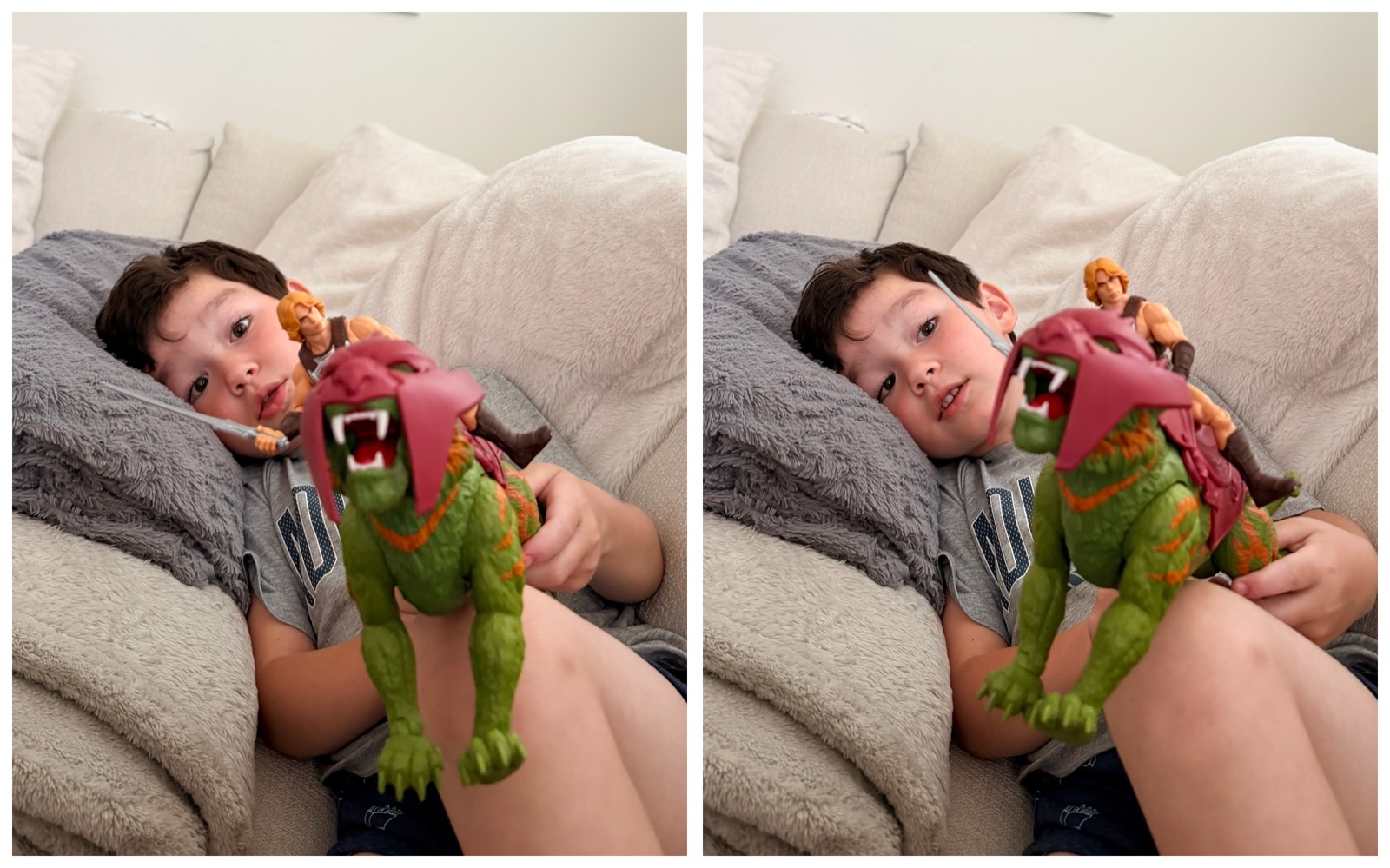
When your four-year-old whines, acknowledge their frustration calmly, state that you cannot understand their 'whiny voice,' and offer a clear script for them to repeat in their strong, clear voice. Reset physical triggers like hunger or sensory discomfort before addressing the behavior.
On this page
Okay so… yesterday morning at precisely 7:12 AM, my four-year-old, Luke, standing in our kitchen draped in head-to-toe camo, lost his entire mind because his French toast was cut into triangles instead of squares. Triangles! Mind you, I made this French toast completely from scratch with fresh brioche and real vanilla, but according to Luke, eating a triangular slice of bread on a Tuesday was an absolute human rights violation. The high-pitched, nail-on-a-chalkboard whine hit that exact frequency that makes your molars vibrate. Hubs was already in his home office with the door shut getting ready for his morning conference calls, and I was standing there in my slippers holding a spatula, wondering if it was too early to lie down on the kitchen runner and surrender to the universe.
If you are currently living in the splash zone of constant kindergarten whining, let me pull up a couch cushion, hand you a hot cup of coffee, and tell you this right now: you are not doing anything wrong, mama. Four is an absolute wildcard of an age. They are no longer tiny toddlers who just cry when they drop a toy; they are fully articulate, wildly stubborn little humans who have massive opinions, zero impulse control, and an uncanny ability to test every single nerve in your body before drop-off.
In our house, I wake Luke at 6:30 AM on school days. He turns five on September 25th—right before our district’s October 1st cutoff—so he started kindergarten this August, which makes him one of the youngest kids in his class. Between prepping for school, taking care of the house, cooking real food from scratch, and keeping up with this blog, my mornings are packed. Being a stay-at-home mom is full-time, high-octane work, and adding a continuous, grating whine to the morning rush makes the pressure feel ten times worse. Over the past few months, Hubs and I have had to figure out what actually works to diffuse the whine before we both lose our damn minds.
So, let us break down why our four-year-olds do this, what is happening in their wild little brains, and the exact, battle-tested scripts that turn off the whinestorm without turning into a kindergarten power struggle.
Why is a four-year-old’s whining enough to drive any sane mama up the wall?
First off, let us validate your sanity. There is actual science behind why whining makes you want to climb into a cupboard. Human ears are biologically tuned to respond to the pitch of a whine even more intensely than a full-on cry. It is designed by nature to be unignorable. When Luke hits that precise, draggy octave because he cannot find his favorite camouflage socks, my fight-or-flight system instantly lights up like a Christmas tree.
At four years old, kids are experiencing a massive bridge between babyhood and big-kid status. Luke wants to do everything like his dad. He wants to carry the heavy gear himself, do everything the way Hubs does it, and watch Outdoor Boys or Outdoor Tom on YouTube while talking about survival shelters. But his brain development does not always match his desire for independence. When his busy little brain gets overwhelmed, tired, or frustrated, his language skills take a nosebleed dive, and out comes the whine.
Understanding that whining is an expression of brain overload—not just your kid trying to drive you nuts—is the first step to staying grounded. That does not mean we tolerate it, but it does mean we stop taking it as a personal attack on our parenting.
What scripts actually stop the whine in its tracks without a meltdown?
When Luke drops into the whine zone, giving a long lecture or getting angry only escalates things. Four-year-olds need clear, short, predictable responses. Here are the exact scripts that work in our home when things go sideways:
- “I love you too much to listen to that voice. Try your strong outdoor voice.” This is my holy grail line. It sets a boundary while offering affection. I keep my voice completely soft and neutral. If he keeps whining, I gently add, “I want to hear what you need, but my ears cannot understand whiny words.”
- “Press my pause button.” Luke loves feeling in control. If he is whining because he wants a slice of watermelon right this second while I am cooking dinner, I point to my nose or collarbone and say, “Press my pause button so I can look right at you.” He walks over, taps my collarbone, takes a breath, and resets. It disrupts the whiny pattern immediately.
- “Tell me in three words.” When a kindergartner is overwhelmed, they drag out their sentences with endless whiny filler words. Telling them, “Give me the main three words, friend,” forces their brain to switch from emotional processing to logical word selection. Luke will pause, clear his throat, and say, “Need camo hat.” Done. Problem identified.
- “Is this a big problem, a medium problem, or a little problem?” Four-year-olds treat a broken snack cracker with the same gravity as a broken leg. Asking them to categorize the issue helps them evaluate their own emotional volume. Luke will usually stop, think, and say, “Little problem… but my truck is stuck.”
Using these scripts consistently creates a muscle-memory pattern for your child. They realize very quickly that whining gets zero traction, but speaking clearly gets immediate attention.
How do physical needs like food, fatigue, and sensory discomfort trigger the whinestorm?
If your four-year-old is whining about everything—the light is too bright, the socks feel weird, the truck ride is too long—ninety percent of the time, the root cause is physical. Their nervous system is simply running on empty.
In our house, physical triggers usually boil down to three main culprits:
1. The Scratch-Made Food Reset
I cook all of our meals from scratch—no boxed junk, no frozen pre-made stuff. Because Luke is constantly running outdoors or climbing all over the park, his blood sugar burns down fast. When a kindergartner’s blood sugar crashes, rationality goes right out the window. If he starts whining out of nowhere, I do not argue. I hand him a real, high-protein snack. A quick slice of scratch-made egg sandwich left over from our weekend fishing trips, a bowl of cold watermelon, or a small plate of pasta carbonara works wonders. (Just never offer him apples or mashed potatoes—Luke absolutely despises both with a passion, and serving those would only guarantee a secondary meltdown!).
2. Clothing and Sensory Agitation
Luke wears camo practically 24/7, but if his base layer is scratchy or damp from running through cold weather, he turns into a total whineworm. We stick strictly to high-quality merino wool base layers for our outdoor adventures around Colorado Springs. Merino wool keeps him warm, wicks sweat, and never feels scratchy against his skin. Synthetic fabrics make him itchy and sweaty, which immediately leads to whiny complaints on the trail. Check their clothes—tagless, soft, breathable merino wool layers can eliminate half your daily complaints before they even start.
3. Sleep Boundaries
Luke has an 8:30 PM bedtime sharp every single night. On school days I wake him at 6:30 AM; on weekends and holidays he is up on his own at 7:30 AM, which tells you everything. If that 8:30 PM boundary slips because we were out late or routine got sloppy, the next day is a non-stop whine-fest. kindergartner need massive amounts of sleep to process everything they are learning. If the whining is constant, guard that bedtime like a mama bear.
What gear or tangible tools actually help keep your cool during peak whining hours?
Let us talk real life: staying calm when your child is emitting a high-frequency whine for forty-five minutes requires serious self-regulation. We are human, and our patience is not infinite. Over the years, I have found that having a few reliable, physical tools in my toolkit helps keep my own nervous system calm so I do not match Luke’s frantic energy.
Here is an honest review of two practical tools I personally rely on when the daily whinestorm hits our house:
High-Fidelity Noise-Dampening Earplugs
When the sensory overload in the kitchen reaches a peak—sizzling chicken piccata on the stove, the dog barking, and Luke whining because his toy truck lost a wheel—these tiny silicone earplugs are an absolute sanity-saver.
- PROS: They do not block out sound completely, so you can still hear your child clearly and keep them totally safe. What they do do is cut out the sharp, grating high frequencies that trigger your body’s stress response. They take the painful edge off the whine so you can respond with a warm, calm voice instead of snapping.
- CONS: It takes a little getting used to hearing your own voice inside your head when you talk. Also, if you drop one on the kitchen rug during a busy morning drop-off scramble, you will be searching on your hands and knees for five minutes.
Visual Countdown Timers for school Routines
Four-year-olds have almost no real concept of time. Telling Luke “we are leaving in five minutes” means absolutely nothing to him, which usually leads to frantic whining when it is time to load into the truck.
- PROS: A mechanical visual timer with a bright disappearing disk lets your child physically see time moving. I set it for shoe-time or cleanup before school. Luke can look over, see how much colored disk is left, and transition without the sudden shock that triggers a whine.
- CONS: If your kid is fiercely independent, they will constantly insist on setting the dial themselves, which can occasionally lead to its own mini-argument if they accidentally reset your timer!
How can you help your kindergartner practice using their strong voice?
You cannot teach a drowning person to swim, and you cannot teach a four-year-old how to communicate properly while they are mid-meltdown over beef parmigiana. The best time to tackle whining is when everyone is happy, full, and relaxed.
Here is how we practice voice control during calm moments:
- Play the ‘Three Voices’ Game: Sit on the carpet together and practice making different voices. We practice our “Whisper Voice” (for watching deer in the yard), our “Whiny Voice” (exaggerate it and make it goofy so they see how funny it sounds), and our “Strong Big-Boy Voice.” Make it a game! Luke loves showing off his strong voice, especially when he pretends he is giving instructions on a camping trip like the guys on YouTube.
- Praise the Clear Voice Instantly: The second your child asks for something using a clear, calm tone, reward it with immediate positive feedback. “OMG, thank you so much for using your clear, strong voice to ask for that watermelon slice! I love how easy that was to understand.” Reinforce the behavior you want to see standard.
- Model Your Own Frustration: When I drop a spatula or spill flour on the counter while cooking, I make a point to pause out loud. “Whew, I am feeling frustrated right now! I am going to take a big breath and use my calm voice to figure this out.” Kids catch far more from our actions than our words.
What should you do when you feel yourself about to snap?
Listen to me, friend: you are going to lose your patience sometimes. You are going to yell or match their whiny tone when you are exhausted and drop-off is in ten minutes. It happens to every single one of us.
When you feel that red-hot wave of frustration rising up in your chest, take a physical step back. If Luke is safe in the living room playing with his wooden tracks, I will literally step into the pantry or stand by the back door for ten seconds, close my eyes, and take three slow breaths. Remind yourself: This is not an emergency. He is four. His brain is building connections, and I am the safe harbor showing him how to handle big feelings.
And if you do snap? Repair with your child. Once things settle down in the truck on the way to school or the park, look at them in the rearview mirror and say, “Mama was feeling overwhelmed earlier and I used a loud voice. I am sorry. Next time I am going to take a big breath and use my strong, calm voice.” Showing them how to apologize and reset is one of the greatest gifts you can give your little human.
Handling constant whining is tough, exhausting work. But with consistent boundaries, clear scripts, plenty of scratch-made food, and a whole lot of deep breaths, you will get through this kindergarten stage together. You’ve got this, mama!
Affiliate link — if you sign up or buy through it, My Mama Mode may earn a small commission at no extra cost to you. As an Amazon Associate, My Mama Mode earns from qualifying purchases. My Mama Mode also participates in other retailer affiliate programs. Learn more.
Frequently asked
kindergarten brings a massive jump in structure, social expectations, and sensory input. After holding it together at school all morning, four-year-olds often drop their guard and let out built-up stress, exhaustion, and frustration through whining once they return to their safe home environment.
Ignoring the behavior entirely can sometimes increase a four-year-old's distress. Instead of ignoring the child, ignore the *whiny tone*. Calmly state that your ears cannot understand whiny words, tell them you want to hear what they need, and invite them to switch to their clear, strong voice.
Whining usually peaks between ages three and four as emotional regulation and language skills catch up with independence desires. With consistent calm boundaries and clear communication scripts, most kids significantly reduce whining as they head toward age five and kindergarten.
Tap the one that fits, mama — no comment box, no pressure ✦
Keep reading, mama

How to Teach Your 4-Year-Old Boy Independent Play (Without the Mom Guilt!)
Learn how to encourage independent play for your active 4-year-old boy without feeling guilty. Practical, real-life SAHM strategies that actually work.
How to Stop Morning Dressing Battles with a Stubborn 4-Year-Old (What Actually Works!)
Tired of morning outfit standoffs before school? Here is how I ended clothing battles with my stubborn 4-year-old without losing my cool or being late.
Potty Training a Boy: What Actually Worked for Us (An Honest, No-Shame Guide)
An honest guide to potty training a high-energy boy, from a mom who survived urine target practice, outdoor pees, and public bathroom panics.